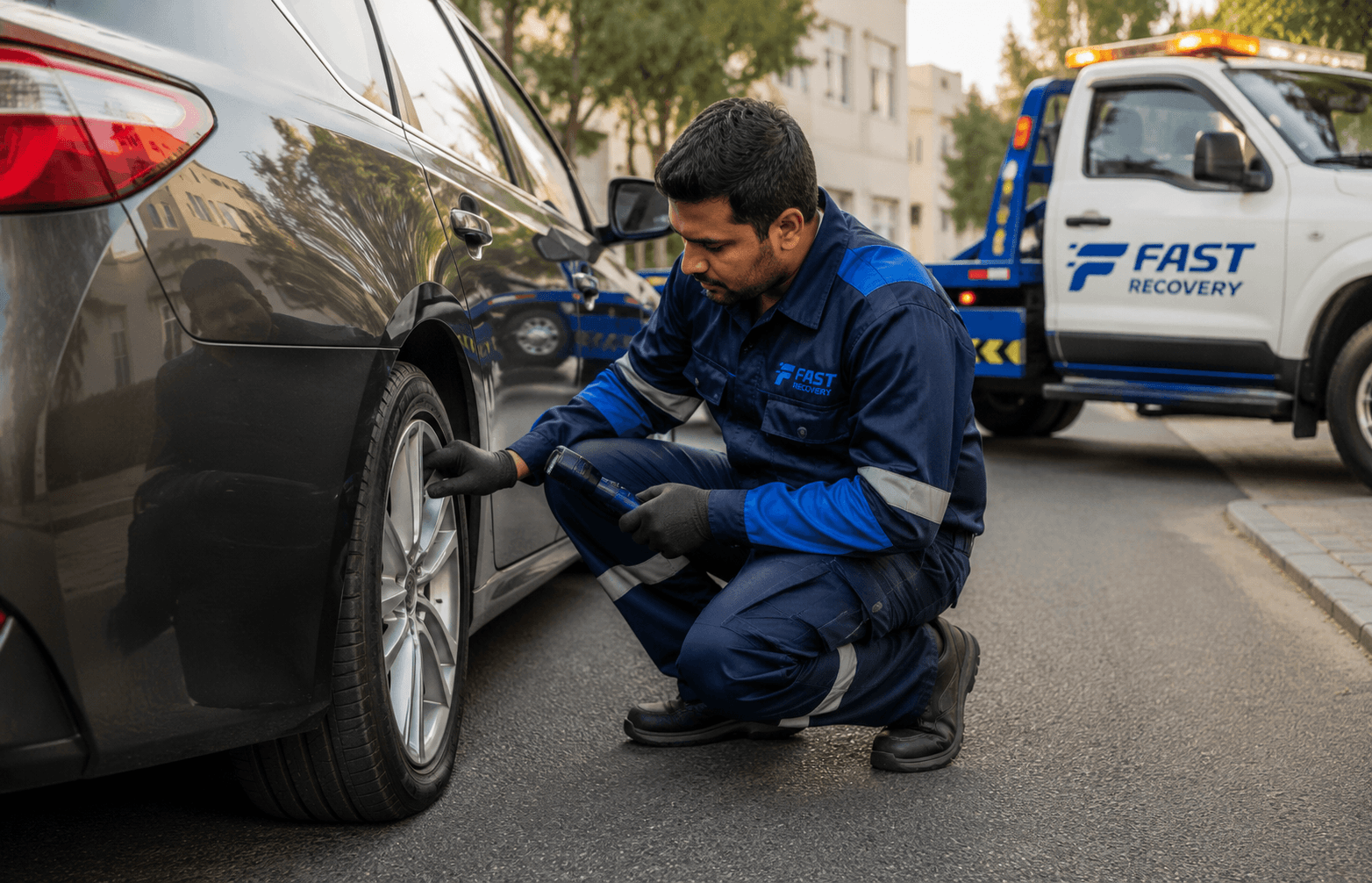
What is the difference between roadside assistance and vehicle recovery?
Roadside assistance attempts to resolve a limited problem where the vehicle has stopped. Vehicle recovery transports a vehicle when it cannot or should not continue driving.
The right choice depends on the problem, the vehicle’s condition, the safety of the working area and whether transport to another destination is required.
What is roadside assistance?
Roadside assistance is on-location support for a limited vehicle problem. Its purpose is to assess the issue and, where practical and safe, help the vehicle continue without being transported.
Roadside assistance does not mean that every breakdown can be repaired beside the road. The vehicle may still require recovery if the problem cannot be resolved safely or if driving it would be unwise.
- Battery jump-start
- Accessible flat tyre or wheel-change assistance
- Minor fuel-related assistance, where operationally offered
- Simple lockout or access assistance, where operationally offered
- Basic roadside assessment
- Minor problems that can be handled with portable equipment
What is vehicle recovery?
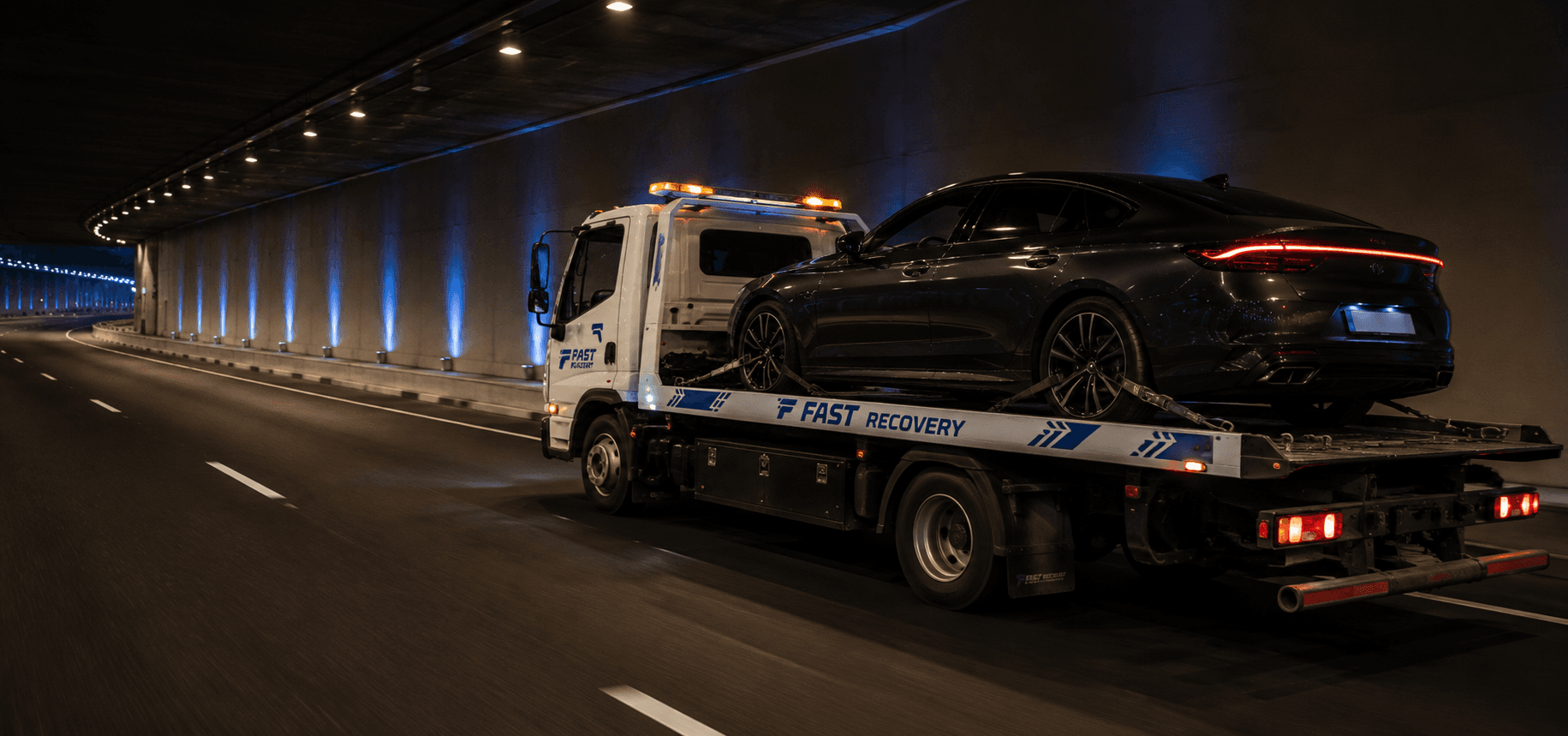
Vehicle recovery moves a vehicle from its current location when it cannot or should not continue driving. The vehicle may be transported using a suitable towing or flatbed recovery method.
- Non-running vehicle
- Major mechanical failure
- Accident damage
- Damaged steering or suspension
- Locked or damaged wheels
- Multiple damaged tyres
- Severe overheating
- Low-clearance vehicle requiring controlled loading
- Vehicle that must be transported to a workshop
- Vehicle located where roadside work is unsafe
How are roadside assistance and vehicle recovery different?
Roadside assistance aims to resolve an accessible problem at the current location, while vehicle recovery includes moving the vehicle to an agreed destination.
The correct choice depends on the vehicle’s condition, its location and whether the issue can be handled without creating additional risk. A provider may initially assess a request as roadside assistance and then recommend recovery after understanding the situation.
| Comparison point | Roadside assistance | Vehicle recovery |
|---|---|---|
| Main purpose | Attempt to resolve a limited roadside problem | Move a vehicle that cannot or should not continue |
| Where the service happens | Usually at the vehicle’s current location | Starts at the vehicle’s location and includes transport |
| Typical equipment | Portable battery, tyre or roadside equipment | Recovery truck, loading equipment, winch or flatbed |
| Typical outcome | Vehicle may continue driving | Vehicle is transported to an agreed destination |
| Best suited for | Minor and accessible problems | Non-running, damaged or unsafe-to-drive vehicles |
| Requires transport | Usually no | Yes |
| Safety requirement | There must be a safe working area | Used when roadside work is unsafe or insufficient |
| Final decision | Depends on the problem and access | Depends on vehicle condition and transport requirements |
How do you know which service you need?
Start with the safety of the location, then describe how the vehicle starts, rolls, steers and brakes. Confirm whether it must be transported rather than guessing a service name.
- 1
Check whether the vehicle is in a safe location
Roadside work should only be considered when there is enough space to inspect or assist the vehicle without exposing the driver, technician or other road users to unnecessary danger.
- 2
Check whether the vehicle can move normally
Tell the provider whether the vehicle can start, roll, steer, brake, shift into neutral and be accessed from all sides.
- 3
Identify the visible problem
Mention battery symptoms, tyre damage, dashboard warnings, overheating, fluid leakage, collision damage, unusual noise or locked wheels.
- 4
Decide whether driving remains safe
A vehicle may start but still be unsafe to drive. Starting the engine is not the only factor.
- 5
Confirm whether transport is required
Recovery is normally the better category when the vehicle must be delivered to a workshop, dealership, home, storage facility or another parking location.
- 6
Let the provider confirm the final option
When you are uncertain, describe the problem rather than guessing the service. FAST RECOVERY can review the vehicle condition, access and destination before confirming the suitable option.
Which service fits common roadside problems?
A safely positioned vehicle with a limited, accessible problem may suit roadside assistance. Damage, an unsafe location or a need for transport usually points towards vehicle recovery.
The battery appears to be flat
Likely starting option: Roadside assistance. A battery jump-start may be appropriate when the vehicle is safely positioned and there are no other obvious problems.
- Recovery may be required if the vehicle does not start after assistance.
- The charging system appears unable to keep it running.
- Another mechanical or electrical issue is suspected.
- The location is unsafe for roadside work.
One tyre is flat
Likely starting option: Flat tyre assistance. Roadside tyre assistance may be suitable when the vehicle is completely away from active traffic, the wheel can be accessed safely and an appropriate spare or repair option is available.
- Recovery may be required when more than one tyre is damaged.
- The wheel or suspension is damaged.
- No usable spare or repair option is available.
- The vehicle is in an unsafe working position.
- Driving could damage the wheel or vehicle.
The engine is overheating
Likely option: Assessment followed by recovery where the vehicle should not continue. Stop in a safe place, switch off the engine and avoid opening a hot cooling system immediately.
- The vehicle continues overheating.
- Coolant is leaking.
- Warning messages remain active.
- Driving could create further damage.
- The cause cannot be safely assessed.
The engine will not start
Possible starting option: Roadside assistance. A battery-related problem may be resolved using roadside equipment.
- Recovery may be required when the problem is not battery-related.
- The engine still does not start.
- The vehicle has an immobiliser, starter or mechanical problem.
- The vehicle needs workshop diagnosis.
The vehicle has accident damage
Likely option: Accident recovery. Contact the appropriate emergency or police service first when the accident involves danger, injury or road obstruction. Vehicle recovery should then be arranged according to police instructions and the vehicle’s condition.
The vehicle has damaged steering, wheels or suspension
Likely option: Vehicle recovery. Do not continue driving when the vehicle cannot steer, brake, roll or maintain a normal position safely. A flatbed or specialised loading approach may be more appropriate depending on the actual damage.
The vehicle has run out of fuel
Possible option: Roadside assistance where fuel assistance is offered. Recovery may be required when fuel delivery is unavailable, the vehicle is in an unsafe location or another problem prevents the car from starting.
The vehicle is in underground parking
Required approach: Access assessment before confirming the service. This may require roadside equipment, a suitable low-access recovery vehicle or a staged recovery process.
- Parking level
- Entrance location
- Height restriction and ramp width
- Gate access
- Whether the vehicle can roll and steer
- Whether recovery equipment can reach it
Can roadside assistance turn into a vehicle-recovery request?
Yes. A request may begin as roadside assistance and change to vehicle recovery when the problem cannot be resolved safely, the vehicle remains non-running or inspection reveals that it should not continue driving.
Clear information before dispatch reduces the chance of sending equipment that is unsuitable for the actual situation.
- Battery boost does not start the vehicle.
- The vehicle starts but immediately stops again.
- Tyre damage also affects the wheel.
- A dashboard warning indicates a more serious issue.
- Steering, braking or suspension is compromised.
- The required repair cannot be performed at the location.
- The vehicle is obstructing traffic.
- Access or weather conditions make roadside work unsafe.
- The vehicle needs workshop diagnosis.
Is towing the same as vehicle recovery?
Towing is one method of moving a vehicle, while vehicle recovery is the broader service of assessing, loading and transporting a vehicle that cannot or should not continue driving.
Towing, roadside assistance and vehicle recovery are not interchangeable terms.
- Conventional towing where suitable
- Flatbed transport
- Winching and controlled loading
- Accident recovery
- Basement or restricted-access recovery
- Transport of a non-running vehicle
When may flatbed recovery be more suitable?
Flatbed recovery may be suitable when the vehicle should remain fully supported during transport or when its condition makes another towing method unsuitable.
The final recovery method should be selected after considering the vehicle manufacturer’s guidance, vehicle condition, access and destination.
- Low-clearance vehicles
- Luxury or sports vehicles
- All-wheel-drive vehicles, depending on manufacturer instructions
- Accident-damaged vehicles
- Non-rolling vehicles
- Damaged wheels or tyres
- Steering or suspension damage
- Vehicles needing controlled loading
What affects the cost of roadside assistance or vehicle recovery?
The cost can depend on the assistance, vehicle, condition, access, distance and equipment required. Confirm the service scope and price before dispatch.
Ask the provider to confirm the service scope and price before dispatch. The lowest quoted option may not be suitable when the vehicle requires different equipment or controlled loading.
- Type of assistance required
- Vehicle type and size
- Vehicle condition and whether it can roll, steer and brake
- Pickup location and transport distance
- Destination
- Basement or restricted access
- Required recovery equipment
- Accident or wheel damage
- Additional loading difficulty
- Traffic and operational availability
Does the location affect which service you need in Dubai?
Yes. A problem that could be handled in a quiet parking area may require vehicle recovery when it occurs on a motorway, inside a tunnel, near an airport access road or in restricted underground parking.
High-speed roads
Roadside work should not be attempted where the vehicle or technician would remain exposed to active traffic.
Tunnels and underpasses
Follow road signs and official instructions. Share the direction of travel and nearest marker.
Dubai International Airport
Share the terminal, arrivals or departures area, access road, parking level, height restrictions and controlled-entry details.
Underground parking
Provide the parking level, height limit, entrance and whether the vehicle can roll or steer.
Extreme heat
Avoid leaving vulnerable passengers in prolonged heat. Seek a safe, cooled area where practical.
Rain or reduced visibility
Use normal vehicle lights appropriately and reserve hazard lights for an emergency stop. Avoid standing water and share clear access details with the recovery provider.
What happens after you contact FAST RECOVERY?
FAST RECOVERY reviews the problem, location, vehicle condition and destination before confirming a suitable roadside or recovery option.
- 1
Explain the problem
Tell FAST RECOVERY what happened and which symptoms are visible.
- 2
Share the location
Send a map pin, road direction, landmark and access information.
- 3
Confirm the vehicle condition
Explain whether it starts, rolls, steers and brakes.
- 4
Confirm the suitable service
FAST RECOVERY reviews whether roadside assistance, towing, flatbed or another recovery method is appropriate.
- 5
Confirm the destination and price
Confirm where the vehicle needs to go and the service scope before dispatch.
- 6
Keep your phone available
The driver may need access, location or vehicle information.
Response time depends on traffic, location, vehicle condition, access and recovery-vehicle availability.
Frequently asked questions
Roadside assistance attempts to resolve a limited problem at the vehicle’s location. Vehicle recovery transports the vehicle when it cannot or should not continue driving. The correct option depends on the problem, vehicle condition and safety of the location.
No. Towing transports a vehicle, while roadside assistance is intended to handle certain minor problems where the vehicle has stopped. Towing can form part of vehicle recovery when transport is required.
No. Roadside assistance is limited by the problem, available equipment, access and safety conditions. A vehicle may require recovery when the issue cannot be resolved safely or requires workshop diagnosis.
A battery jump-start may be the appropriate first option when the vehicle is safely positioned and no other issue is visible. Recovery may be required if the vehicle still does not start or cannot remain running.
Not always. Tyre assistance may be suitable when one tyre is affected and there is a safe working area. Recovery may be required for multiple damaged tyres, wheel damage, no usable spare or an unsafe location.
A vehicle should not be driven when steering, braking, tyres, wheels, suspension, visibility or mechanical condition make continued driving unsafe or likely to cause additional damage.
Describe the problem rather than relying only on a service name. FAST RECOVERY can review the location, vehicle condition and photographs before confirming the appropriate equipment.
Neither method is universally better. Flatbed transport may be more suitable for certain low-clearance, luxury, all-wheel-drive, damaged or non-rolling vehicles. The recovery method should match the vehicle and its condition.
Coverage varies by policy. Check whether your insurance includes roadside assistance, towing-distance limits, approved providers, accident recovery and destination restrictions.
Call emergency services when there is immediate danger, injury, fire, serious smoke, a dangerous road obstruction or another urgent safety concern. Dubai Police lists 999 for emergencies and 901 for enquiries.
What is the practical next step?
Prioritise safety, share clear location and vehicle information, and avoid guessing the required recovery method. FAST RECOVERY can review the reported condition, access and destination when professional assistance is needed.
About this guide
This guide was prepared to help Dubai drivers understand the practical difference between roadside assistance and vehicle recovery. It explains which problems may be handled at the vehicle’s location, when transport may be required and what information should be shared before dispatch.
The guide provides general information and does not replace instructions from Dubai Police, RTA, emergency services, a vehicle manufacturer, insurer or qualified repair professional.
- Published
- 1 August 2026
- Last reviewed
- 2 August 2026
- Category
- Service Selection Guide
- Written by
- FAST RECOVERY Editorial Team
- Reviewed by
- FAST RECOVERY Operations Team
- Service area
- Dubai, United Arab Emirates
Guide updates
Latest content review
Service descriptions, internal links, official safety references and structured data reviewed.
Initial publication
Initial guide published with service definitions, comparison guidance, common roadside scenarios, Dubai-specific considerations and service-selection FAQs.
Based on what you’re reading
Recommended for this section
Recommended readingWas this guide helpful?
READER CONTRIBUTIONS
Comments and guide updates
Have a relevant question, experience or correction? Submissions will be reviewed before publication or use once secure storage is configured.
Comment guidelines
- Keep contributions relevant and do not include personal contact, vehicle-registration, insurance or sensitive information.
- Promotional spam, abusive material and unsupported safety instructions will not be published.
- Comments are reviewed and are not an emergency contact channel.
Read the Privacy Policy before sharing personal information.
Reader comments
No approved comments yet. You can submit a relevant question or observation for review once secure moderation is configured.
Share your experience or question
Comments are reviewed before publication. Your email address would never be displayed publicly.